
Konjikido (Golden Hall): A UNESCO World Heritage Treasure Shimmering with 900 Years of Golden Majesty

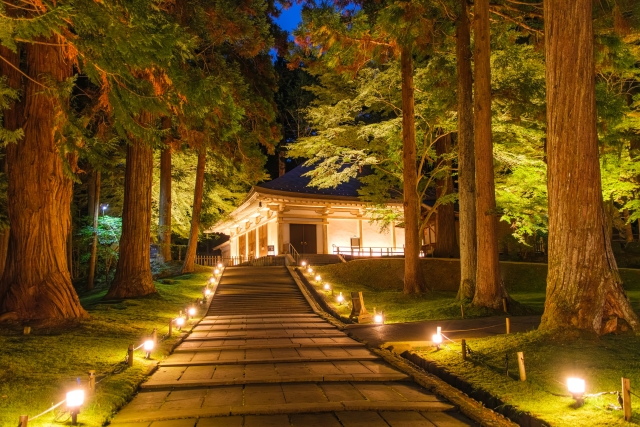
Nestled in the sacred grounds of Chuson-ji Temple in Hiraizumi, Iwate Prefecture, Konjikido (Golden Hall) stands as one of Japan’s most breathtaking cultural treasures. Built in 1124 during the Heian period, this entirely gold-leafed Buddhist hall represents the Pure Land paradise described in Buddhist scriptures and houses the remains of three generations of the powerful Fujiwara clan. As a UNESCO World Heritage site, it’s a must-visit destination for anyone seeking to experience Japan’s authentic historical splendor.
The Verdict
Absolutely worth visiting. Konjikido is a rare opportunity to witness an intact 900-year-old golden masterpiece that has survived wars, fires, and natural disasters. The craftsmanship—gold leaf covering, intricate mother-of-pearl inlay (raden), and exquisite metalwork—is simply extraordinary. At ¥1,000 for admission (including the museum), it offers exceptional value for a UNESCO World Heritage experience. However, be prepared for the no-photography rule inside the hall and a moderately challenging uphill approach along the temple path.
Tourist Quick Check
| Category | Details |
|---|---|
| Payment | Credit Cards Accepted (Admission), Cash Only (Souvenir Shops) |
| English Support | English signage available, limited English-speaking staff |
| Reservation | Not required (walk-in) |
| Wait Time | Minimal on weekdays, moderate on weekends/holidays |
| Wi-Fi | Unavailable |
Why Locals Love It
Konjikido holds a sacred place in Japanese cultural history. Built by Fujiwara no Kiyohira in 1124, the Golden Hall embodies the concept of “Minori no Kuni” (the Ideal Buddhist Land) that the Northern Fujiwara clan sought to create in Hiraizumi. The entire structure is covered in gold leaf, with elaborate mother-of-pearl inlay and lacquerwork that has survived nearly a millennium.
What makes this site particularly special is its role as a mausoleum. Inside the three altars rest the mummified remains of the first three Fujiwara lords—Kiyohira, Motohira, and Hidehira—along with the head of the fourth lord, Yasuhira. This combination of artistic brilliance and historical gravitas creates a deeply moving experience that resonates with both Japanese visitors and international travelers.
The site also connects to Japanese literary heritage: the poet Matsuo Basho visited in the 17th century and wrote about it in his famous travel diary “Oku no Hosomichi” (The Narrow Road to the Deep North), while the novelist Kenji Miyazawa also drew inspiration from this sacred place.
Key Highlights
- The Golden Hall Itself: Entirely covered in gold leaf with stunning raden (mother-of-pearl) inlay and intricate metalwork representing the Buddhist Pure Land
- The Three Altars: Each features an Amida Buddha flanked by Kannon and Seishi Bodhisattvas, six Jizo Bodhisattvas, and guardian kings—a unique Buddhist configuration
- The Museum (Sankozo): Houses priceless artifacts and detailed explanations about the hall’s history and construction (visit this first for context)
- Hand-Written Goshuin: Temple seals are calligraphied by hand inside the Golden Hall itself, a special souvenir unique to this location
- Historic Path: The approach through Chuson-ji Temple includes multiple smaller halls and monuments to Matsuo Basho and Kenji Miyazawa
- Seasonal Beauty: Spectacular autumn foliage in November and serene snow-covered landscapes in winter
Honest Warnings
- No Photography Inside: Strictly prohibited in both the Golden Hall and the museum. You’ll need to preserve the memory in your mind only.
- Challenging Path: The approach involves steep slopes and uneven stairs. Wear proper walking shoes, not sandals or heels. In winter, the path can be icy—slip-prevention rope attachments are provided at the entrance.
- Physical Demands: Expect a 15-20 minute uphill walk from the entrance. There are handrails and ropes to assist, but those with mobility issues should be aware.
- Limited Viewing Time: The Golden Hall is relatively small, and you’ll view it from outside a protective glass enclosure. The actual viewing experience is brief (5-10 minutes).
- Visit the Museum First: Don’t skip the Sankozo Museum before entering the Golden Hall. The context and explanations make the experience far more meaningful.
- Cash for Souvenirs: While admission accepts credit cards, souvenir shops along the path are cash-only.
- Special Items at Golden Hall: Some exclusive amulets and items are only available at the Golden Hall itself, not at other shops along the path.
- Hours: Open daily 8:30 AM – 5:00 PM. Arrive early to avoid crowds, especially during peak seasons.
Konjikido is more than a tourist attraction—it’s a pilgrimage to one of Japan’s most precious cultural treasures, where 900 years of history shimmer in golden splendor.
アクセス
金色堂
Konjikido (Golden Hall)
〒029-4102 岩手県西磐井郡平泉町平泉衣関202
202 Hiraizumi Koromogaseki, Hiraizumi-cho, Nishiiwai-gun, Iwate 029-4102, Japan
TEL: 0191-46-2211