
Ryoanji Temple: A Hidden Zen Sanctuary in Kawasaki Where Stone Gardens Challenge Your Perception

 kote2
kote2 The Verdict
Ryoanji Temple is a serene Jodo sect Buddhist temple worth visiting for travelers seeking authentic Japanese spiritual experiences away from the tourist crowds. Located just 10 minutes from Noborito Station, this peaceful temple offers a fascinating stone garden puzzle and a glimpse into traditional temple life. While it’s not as grand as Kyoto’s famous temples, its intimate atmosphere, historic significance as the 14th temple of the Tamagawa 34 Kannon Pilgrimage, and intriguing stone garden make it a rewarding stop for curious visitors.
Tourist Quick Check
| Category | Details |
|---|---|
| Payment | Free Entry |
| English Information | Limited |
| Reservation | Walk-in Recommended |
| Wait Time | None |
| Wi-Fi | Unavailable |
Why Locals Love It
Ryoanji Temple has been a spiritual cornerstone of the Shukugawara neighborhood since 1593, when it was established by the revered monk Shinren Kuyo Shonin, who also founded Keiganji Temple in Setagaya. As the 14th stop on the Tamagawa 34 Kannon Pilgrimage route, it attracts devoted pilgrims seeking blessings from the temple’s sacred Sho Kannon Bosatsu (Holy Avalokitesvara Bodhisattva).
What makes this temple special to locals is its tranquil, unpretentious atmosphere. Unlike crowded tourist temples, Ryoanji maintains an authentic neighborhood temple feel where you can experience genuine Japanese Buddhist culture. The temple is also noted as the first temple of the Tamagawa Six Amida pilgrimage, though this particular pilgrimage route is currently dormant. Visitors are charmed by the impressive metasequoia tree behind the bell tower, whose golden leaves create a stunning display in autumn, and the surprising population of massive koi fish—some reaching 50cm in length—that inhabit the nearby moat, occasionally visited by white herons.
The temple’s resident priests are known for their warm hospitality, making pilgrims and visitors feel genuinely welcome—a rarity that adds to the temple’s authentic charm.
Key Highlights
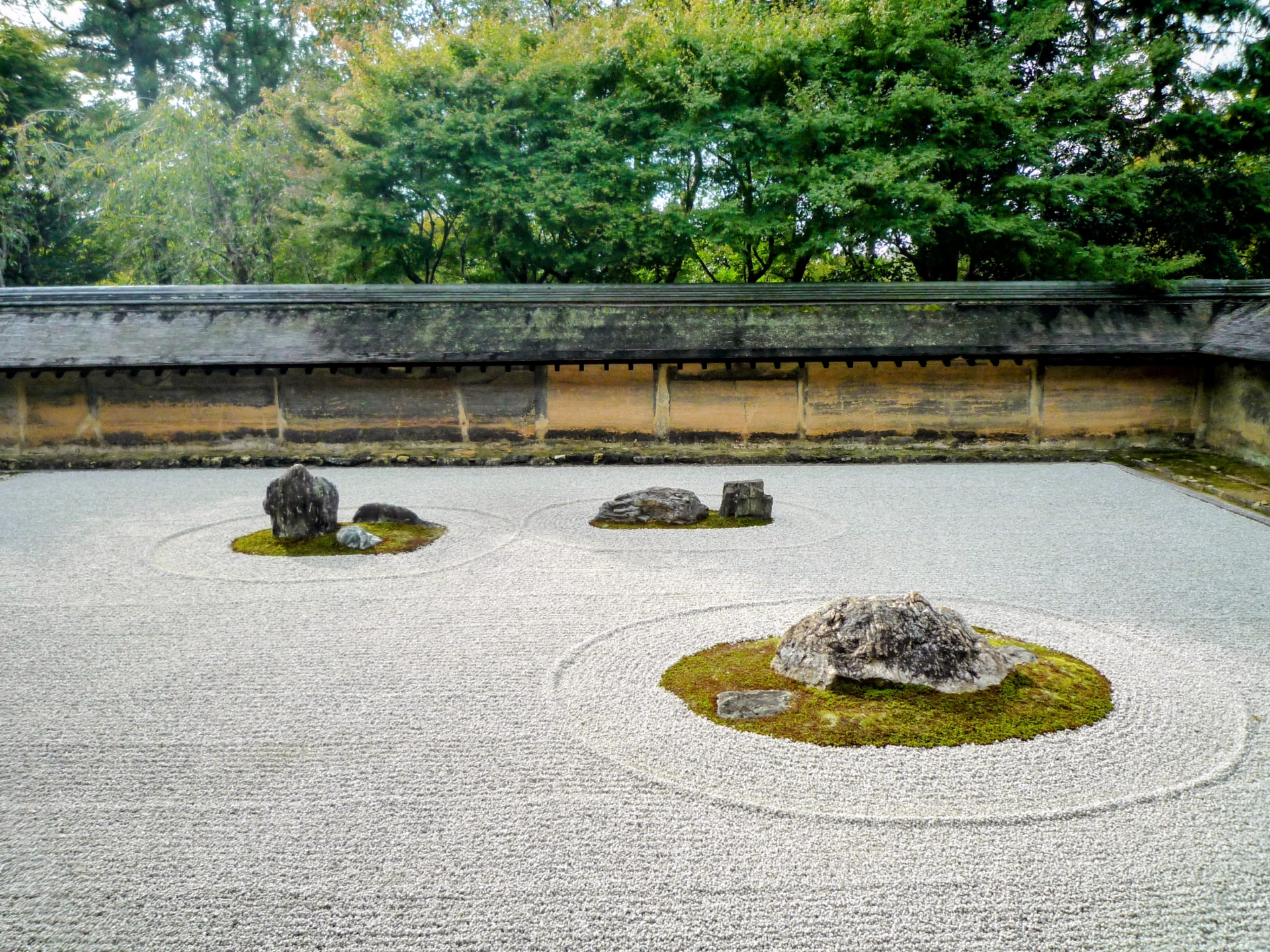
- The Stone Garden Mystery: The temple features an intriguing stone garden with 15 stones arranged in such a way that you cannot see all of them at once from any single viewing angle. Try it yourself and experience the profound Zen philosophy behind this optical puzzle—it’s a fascinating exercise in perception and mindfulness that reveals the depth of Japanese Zen aesthetics.
- Historic Kannon Image: The main object of worship for pilgrims is the Sho Kannon Bosatsu statue enshrined in the main hall, while the temple’s principal deity is Amida Nyorai (Amitabha Buddha).
- Magnificent Metasequoia Tree: The towering metasequoia behind the bell tower is particularly photogenic in autumn when its leaves turn brilliant yellow.
- Giant Koi Fish: Don’t miss the moat behind the temple where enormous koi swim—some measuring up to 50cm. If you’re lucky, you might spot a white heron hunting along the water’s edge.
- Pilgrim Experience: As part of the Tamagawa 34 Kannon Pilgrimage route, you can receive a temple seal (goshuin) and participate in traditional Buddhist prayer rituals.
Honest Warnings
- Stone Garden Location: Some visitors have difficulty locating the stone garden as it’s not immediately obvious. Don’t hesitate to politely inquire with temple staff if you can’t find it—they’re generally helpful despite limited English.
- Modest Scale: This is a local neighborhood temple, not a grand tourist attraction. Set your expectations accordingly—it’s about authentic atmosphere rather than Instagram-worthy grandeur.
- Limited Tourist Infrastructure: There’s no English signage, Wi-Fi, or tourist facilities. Come prepared with translation apps and downloaded maps.
- Respectful Behavior Required: As an active place of worship, maintain quiet behavior, ask permission before photographing main hall interiors, and follow temple etiquette (bow before entering gates, don’t point camera lenses directly at Buddha statues without permission).
- Access: It’s a 10-minute walk from Noborito Station on the Odakyu Line. The area is residential, so follow a map app carefully to avoid getting lost in the quiet streets.
- Opening Hours: Temple grounds are generally accessible during daylight hours, but the main hall may not always be open. For goshuin (temple seals) or special prayer services, weekday afternoons or weekend mornings offer the best chance of finding priests available.
アクセス
大雲山 龍安寺
Ryoanji Temple
〒616-8001 京都市右京区龍安寺御陵下町13 龍安寺
Ryoan-ji Temple, 13 Ryoanji Goryonoshitacho, Ukyo-ku, Kyoto 616-8001 Japan