
Senbon Torii: Walk Through Kyoto's Mystical Vermillion Tunnel at Fushimi Inari

 kote2
kote2 The Verdict
Senbon Torii at Fushimi Inari Taisha is an absolute must-visit for anyone traveling to Kyoto. This iconic pathway of thousands of vermillion torii gates creates an otherworldly tunnel experience that’s unlike anything else in Japan. With a perfect 4.7 rating and open 24/7, it offers flexibility for both sunrise seekers and those who prefer the mystical evening atmosphere. The walk through the vermillion tunnel is magical—where light and shadow create stunning contrasts perfect for photography. While crowds can be intense during daytime, the experience is worth it, and visiting during early morning or evening hours offers a more serene and contemplative journey.
Tourist Quick Check
| Payment | Free Admission |
|---|---|
| English Support | English signage available |
| Reservation | Not Required (Open access) |
| Best Visit Time | Early morning (7-9 AM) or evening (after 5 PM) to avoid crowds |
| Opening Hours | 24 Hours (Currently Open) |
Why Locals and Tourists Love It
Senbon Torii has become one of Kyoto’s most iconic landmarks, drawing approximately 80% international visitors according to recent reviews. The name “Senbon” means “one thousand,” but the actual number of torii gates throughout the entire Inari Mountain exceeds 10,000. The densely packed section near the main shrine features 800-900 gates creating that famous tunnel effect.
The tradition of donating torii gates dates back to the Edo period, when worshippers began offering them as prayers for wishes to “pass through” (tōru in Japanese—a play on words with torii) or in gratitude when their prayers were answered. Each gate is donated by individuals or businesses, with the donor’s name inscribed on the back.
The vibrant vermillion color isn’t just aesthetically striking—it holds spiritual significance. In Japanese culture, this shade of red is believed to ward off evil spirits and amplify divine power. Walking through this vermillion tunnel feels like stepping into another dimension, where the play of light filtering through the gates creates an almost hypnotic atmosphere. The interplay of shadows and glowing red creates incredible photo opportunities that change throughout the day.
Night visits offer a completely different experience. Around 9 PM, the daytime crowds disappear, leaving behind a serene, almost sacred silence. The illuminated gates glowing in the darkness create a mystical pathway that feels like it leads to another world. Many visitors report that the nighttime atmosphere allows them to truly feel the spiritual essence of this sacred site.
Key Highlights
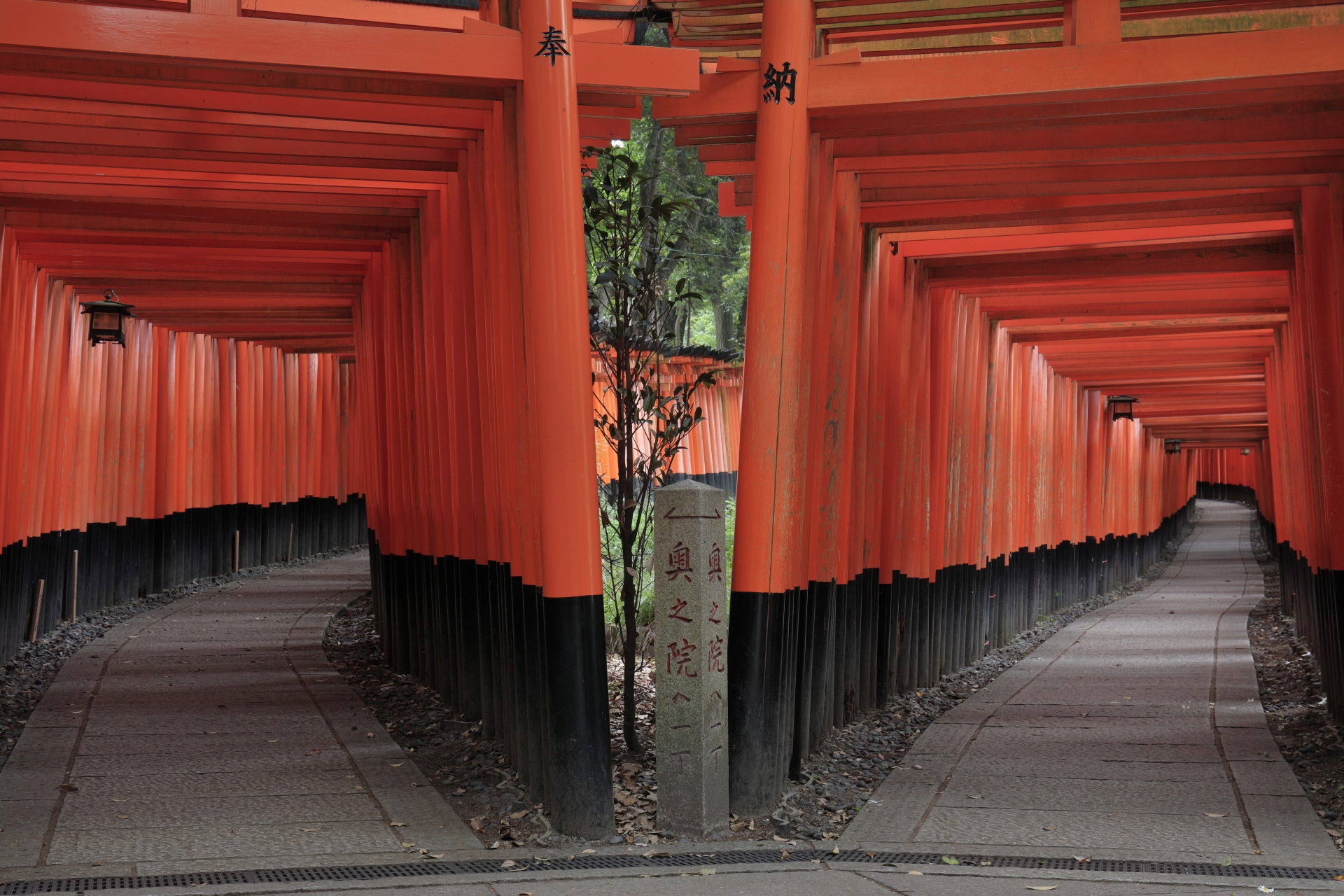
- The Main Torii Tunnel: The densely packed section immediately behind the main shrine where gates split into two parallel paths—the most photographed spot
- Okusya Hohaisho: The first major rest point after the main torii tunnel, offering your first glimpse back toward Kyoto city
- Yotsutuji Intersection: Approximately halfway up the mountain, this spot offers spectacular panoramic views of Kyoto
- Ganrikisha Shrine: Known for prayers related to eye health and gaining “insight”—with good coffee made from sacred water
- Summit (Ichinomine): For those completing the full 2-hour mountain circuit (4km), reaching the 233-meter peak is deeply satisfying
- Night Photography: The illuminated gates after dark create an ethereal, otherworldly atmosphere perfect for unique photos
Honest Warnings
Crowds Can Be Overwhelming: During daytime, especially weekends and peak tourist seasons, the entrance area and main tunnel section can be packed shoulder-to-shoulder. You may need to wait your turn for photos at popular spots. Walking just 10-15 minutes further up the mountain significantly reduces crowds.
Physical Demands: The full mountain circuit involves continuous stone steps and takes 2-3 hours. Even reaching the halfway point (Yotsutuji) requires moderate fitness. Wear proper walking shoes—not fashion sandals or heels. Winter can be cold on the mountain, but the climb will warm you up, so dress in layers.
Summer Heat Warning: During summer months, the humidity and temperature inside the torii tunnel can be intense. Bring water and be prepared to sweat, even in the “shade” of the gates.
Limited English Spoken: While there are English signs, staff at the tea houses and shops along the mountain path may have limited English ability. Having a translation app ready can be helpful.
Facilities Are Limited: Toilets are available at the base and at Yotsutuji, but not at the summit. Vending machines exist along the path but become pricier as you ascend. Plan accordingly.
Low Lighting: While the path is accessible 24 hours, street lighting is minimal in many sections. If visiting at night or very early morning, bring a flashlight or use your phone’s light for safety on the steps.
Photography Etiquette: Be mindful of other visitors when taking photos. The narrow tunnel sections can create bottlenecks when people stop for selfies. Step aside to allow others to pass.
Getting There
Senbon Torii is located within Fushimi Inari Taisha Shrine grounds. Take the JR Nara Line to Inari Station (2 stops from Kyoto Station, 5 minutes), and the shrine entrance is immediately in front of you. Alternatively, take the Keihan Main Line to Fushimi-Inari Station (5-minute walk). Free parking is available but fills up quickly on weekends.
アクセス
千本鳥居
Senbon Torii
〒612-0882 京都府京都市伏見区深草藪之内町68番地
68 Fukakusa Yabunouchicho, Fushimi Ward, Kyoto, 612-0882, Japan
TEL: 075-641-7331