
Gangoji Temple: A Hidden World Heritage Gem in Nara's Historic Naramachi

 kote2
kote2 Nestled in the charming streets of Naramachi, Gangoji Temple is one of Nara’s best-kept secrets—a UNESCO World Heritage Site that offers an intimate encounter with Japan’s ancient Buddhist history without the crowds. While most tourists flock to Todaiji and Kofukuji, this 1,400-year-old temple lets you experience authentic Japanese spirituality in peaceful solitude.
The Verdict
⭐ Rating: 4.2/5
Absolutely worth visiting, especially if you’re looking to escape the tourist crowds while still experiencing a genuine World Heritage Site. Gangoji offers a rare opportunity to see Japan’s oldest roof tiles dating back to the Asuka period (592-710 CE) still in use today. Perfect for history enthusiasts and those seeking a quieter, more contemplative temple experience. The combination of ancient architecture, important cultural treasures, and its location in the atmospheric Naramachi district makes this a must-visit for travelers wanting to go beyond Nara’s mainstream attractions.
Tourist Quick Check
| Category | Details |
|---|---|
| Payment | Cash Only (Likely) |
| English Support | Limited (Some English signage available) |
| Reservation | Not Required (Walk-in) |
| Wait Time | Minimal (Rarely crowded) |
| Wi-Fi | Unavailable |
Why Locals Love It
Gangoji Temple holds a special place in Japanese Buddhist history as one of the Nanto Shichi Daiji (Seven Great Temples of Nara) and is considered the birthplace of Japanese Buddhism. Originally established as Asukadera in 588 by the powerful Soga clan, it was relocated to Nara and became Gangoji during the Nara period.
What makes this temple truly remarkable is its authentic connection to Japan’s ancient past. The roof tiles you see today—some dating back 1,400 years to the Asuka and Nara periods—are still functioning as they were intended centuries ago. Locals appreciate that the temple maintains its humble, unpretentious atmosphere, free from excessive decoration or commercialization. The temple’s location in Naramachi, surrounded by traditional machiya townhouses from the Edo and Meiji periods, creates a nostalgic ambiance that residents cherish.
The Horinji treasure hall houses numerous Important Cultural Properties, including a National Treasure five-story wooden pagoda miniature from the Nara period that looks so precise visitors often mistake it for a modern model. This temple offers a place where time seems to slow down, allowing for quiet reflection and a genuine connection to Japan’s spiritual heritage.
Key Highlights
- Ancient Roof Tiles (Gyoki-gawara) – Japan’s oldest roof tiles still in use, with sections dating from the 7th-8th centuries. Look closely and you’ll notice the fascinating pattern variations across different sections of the roof.
- Gokurakubo Main Hall (National Treasure) – A designated UNESCO World Heritage Site featuring a unique mandala as the main object of worship instead of a traditional Buddhist statue.
- Five-Story Miniature Pagoda (National Treasure) – An incredibly detailed wooden pagoda from the Nara period displayed in the Horinji treasure hall. Despite its intricate craftsmanship, this is an authentic 8th-century structure, not a modern replica.
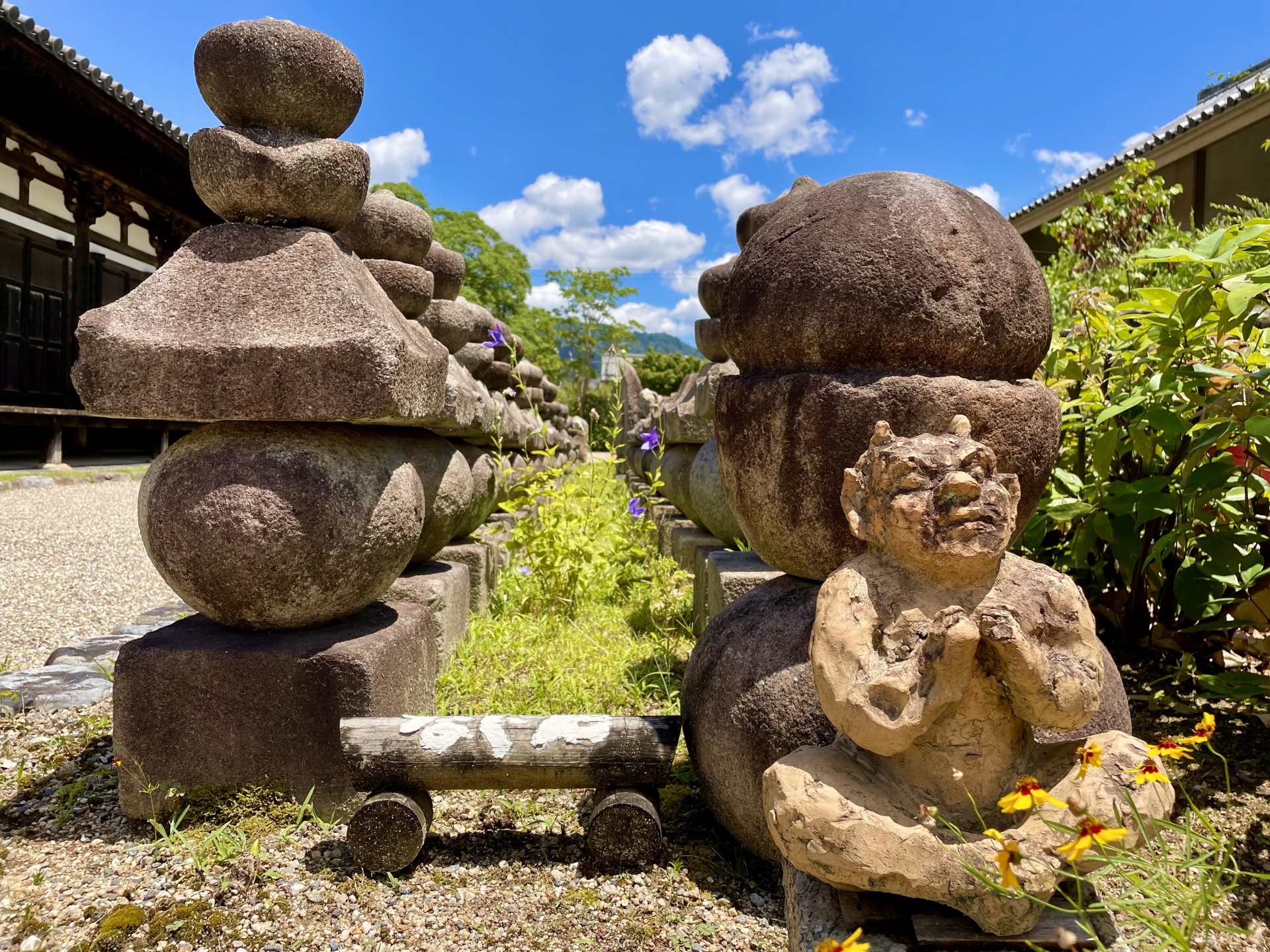
- Moss-Covered Stone Buddhas – Atmospheric Buddhist statues scattered throughout the tranquil grounds, perfect for contemplative photography.
- Naramachi Atmosphere – The temple is surrounded by historic machiya townhouses, making it ideal for a combined heritage walk through one of Nara’s most charming neighborhoods.
- Historical Significance – Direct lineage from Asukadera, built by Soga no Umako, one of the most powerful figures in early Japanese history who championed Buddhism’s introduction to Japan.
Honest Warnings
- Early Closing Time – The temple closes at 4:30 PM (last entry likely around 4:00 PM), so plan your visit accordingly. Don’t leave it for late afternoon exploration.
- Admission Fee Required – Unlike some temples in Nara, Gangoji charges an entrance fee to access the main hall and treasure museum. Budget accordingly.
- Limited English Information – While some signage exists in English, detailed explanations are primarily in Japanese. Consider researching beforehand or using a translation app to fully appreciate the historical context.
- Cash Payments – As a traditional temple, it’s highly likely they only accept cash for admission fees. Bring yen with you.
- Modest Scale – This is a compact temple compared to Todaiji or Kofukuji. If you’re expecting vast grounds and multiple large buildings, you may be surprised by its intimate size. However, this is part of its charm.
- Navigation in Naramachi – The temple is located within the narrow streets of Naramachi, which can be slightly confusing to navigate. Use Google Maps or ask locals for directions.
- Less Dramatic Than Major Temples – If you prefer grand, imposing architecture, you might find Gangoji too understated. Its beauty lies in subtlety, age, and historical authenticity rather than visual spectacle.
Pro tip from a local: The roof tiles truly are fascinating—take time to observe how the patterns and colors change across different sections. This visible history spanning 1,400 years is what makes Gangoji special. Combine your visit with a leisurely stroll through Naramachi’s traditional streets for the complete experience.
Access
Gangoji Temple
元興寺
11 Chuincho, Nara, Nara 630-8392, Japan
〒630-8392 奈良県奈良市中院町11
TEL: 0742-23-1377