
Omiwa Shrine: Japan's Most Ancient Sacred Mountain Where Gods Still Dwell

 kote2
kote2 Nestled at the foot of the mystical Mount Miwa in Nara Prefecture, Omiwa Shrine (大神神社) stands as one of Japan’s oldest and most sacred Shinto shrines. Unlike any other shrine you’ll visit in Japan, Omiwa has no main hall—because the entire mountain itself is the deity. This is Japanese spirituality in its purest, most ancient form, and it’s an experience that will leave you breathless.
The Verdict
⭐ Rating: 4.6/5 – Absolutely worth visiting. This is one of Japan’s most spiritually significant sites, offering a rare glimpse into ancient Shinto practices. The mountain worship tradition, sacred atmosphere, and natural beauty make it a must-visit for anyone seeking authentic Japanese culture. However, be prepared for crowds during New Year and major festivals, and note that mountain climbing (tohai) has strict rules that require advance research.
Tourist Quick Check
| Category | Details |
|---|---|
| Payment | Cash (shrine offerings), Credit cards accepted at shop |
| English Support | Limited English signage, English pamphlets available |
| Reservation | Not required (except for mountain climbing registration) |
| Wait Time | 10-20 mins normally, 1-2 hours during New Year |
| Wi-Fi | Unavailable |
Why Locals Love It
Omiwa Shrine represents the very essence of Japanese spirituality. As one of Japan’s oldest shrines, it maintains the original form of Shinto worship—yama-gami or mountain deity worship. The shrine doesn’t have a honden (main sanctuary) because Mount Miwa itself (467m) is considered the sacred body of the deity Ōmononushi-no-Kami.
The deity is revered as the guardian of nation-building, matchmaking, sake brewing, medicine, and protection from misfortune—essentially all aspects of human life. The shrine’s connection to sake brewing is so strong that you’ll see sugidama (cedar ball ornaments) that breweries across Japan display as symbols of their craft.
The atmosphere here is markedly different from tourist-heavy shrines. Locals speak of en (spiritual connection)—the belief that only those meant to find this place will actually arrive here. The sacred energy is palpable, with many visitors reporting a sense of tranquility and spiritual cleansing the moment they pass through the torii gate.
Key Highlights
- Mitsu-Torii (三ツ鳥居) – The unique triple torii gate behind the worship hall is a designated Important Cultural Property, with three gates combined into one mystical structure
- Mount Miwa Climbing (登拝) – Experience sacred mountain climbing where photography is strictly forbidden and silence is required. This is a former forbidden zone now open to the public with proper registration at Sai Shrine
- Kusuri-mizu (Sacred Medicinal Water) – At Sai Shrine, drink the blessed spring water believed to cure all ailments (recently limited per person due to popularity)
- Nadeusagi (Stroking Rabbit) – The rabbit statue at the assembly hall is said to bring good fortune and relieve physical pain when petted
- Meoto Daikoku-sha – A sub-shrine dedicated to matchmaking and marital harmony, popular as a power spot for love
- Seasonal Illuminations – During New Year and special occasions, hundreds of lanterns create an otherworldly atmosphere at dusk
- Weeping Cherry Blossoms – The shrine grounds transform into a breathtaking pink paradise during spring
Honest Warnings
- New Year Chaos – Parking can take 1.5+ hours during New Year period, and main torii gate toilets may have 30-minute waits. Plan accordingly or visit during off-peak times
- Mountain Climbing Rules Are Strict – Tohai (sacred climbing) requires registration, no photography, no talking, no eating/drinking on the mountain, and appropriate attire. Some devotees climb barefoot. Research rules thoroughly before attempting
- Weather-Dependent Closures – Mountain climbing closes during rain, snow, and bad weather for safety
- Large Grounds – Visiting all sub-shrines takes considerable time. If climbing the mountain, allow 3-4 hours total. First-time visitors should plan their route in advance
- Limited English – Signage is primarily in Japanese, though the spiritual atmosphere transcends language barriers
- Sacred Water Restrictions – The medicinal water has quantity limits per person due to increasing demand. Don’t plan to fill large containers
- Steep Walking – The path to Sai Shrine (Kusuri-mizu) is an uphill climb that can be tiring, especially in summer heat
Access & Practical Information
Hours: Open 24 hours (office hours 9:00 AM – 5:00 PM)
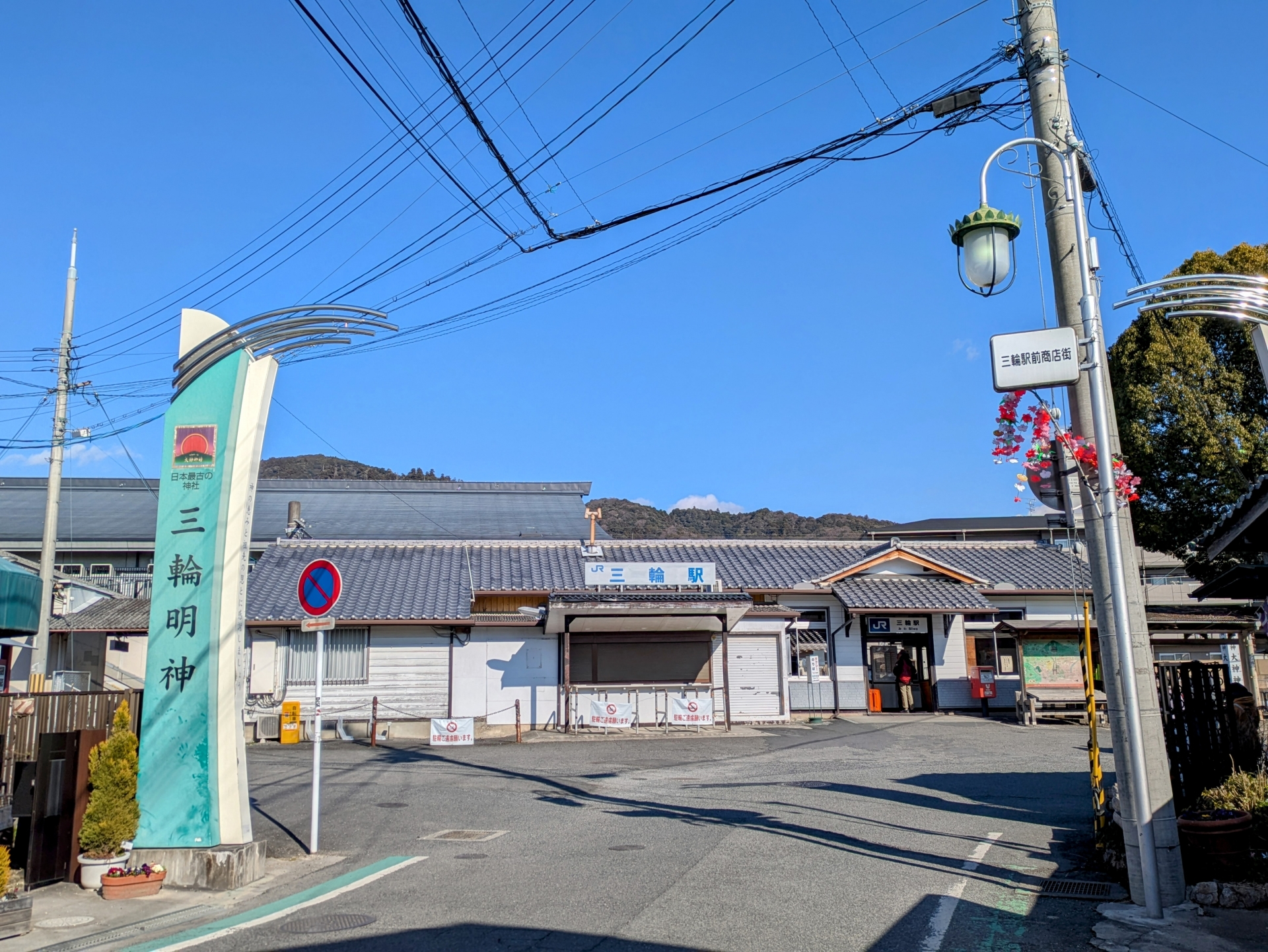
Access: 8-minute walk from JR Miwa Station (Sakurai Line), or 25 minutes by car from Kashihara-Kita IC
Parking: Free parking available (expect delays during peak seasons)
Best Time to Visit: Early morning for peaceful atmosphere, or dusk during festival periods for illuminated beauty
Food stalls line the approach during New Year and special events, and nearby shops offer local specialties including sōmen noodles, for which the Miwa area is famous.
Access
Omiwa Shrine (Oomiwa Jinja)
大和國一宮 三輪明神 大神神社
1422 Miwa, Sakurai City, Nara Prefecture 633-8538, Japan
〒633-8538 奈良県桜井市三輪1422
TEL: 0744-42-6633