
Tayama's Personal Top 3 of Shinjuku’s ramen

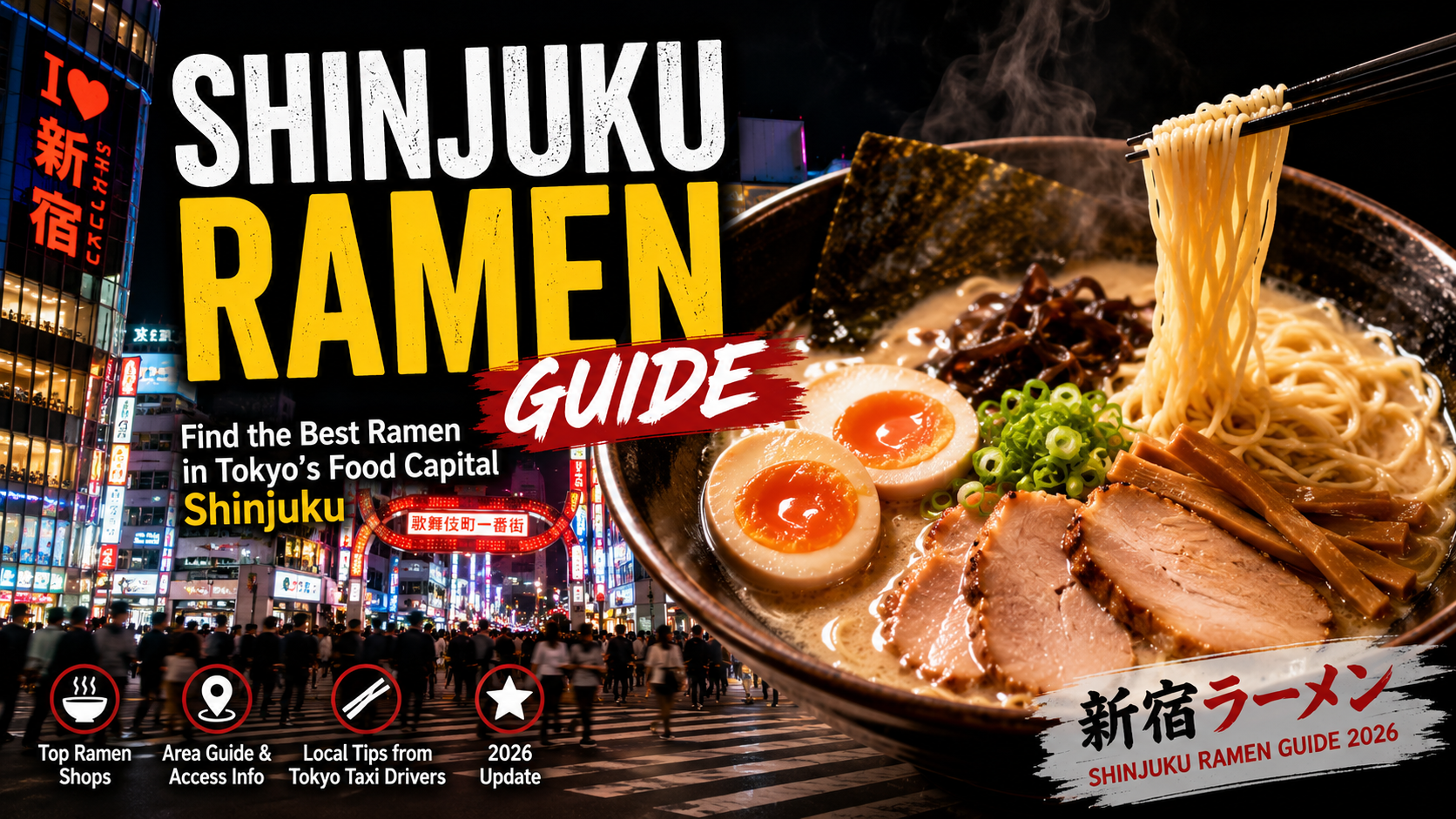
Shinjuku’s ramen scene isn’t just big — it’s impossibly dense. Walk five minutes from the east exit of Shinjuku Station and you’ll pass tonkotsu, shoyu, shio, miso, tsukemen, spicy, and chan-kei ramen shops, each with its own distinct identity. For a first-time visitor, the choices can feel overwhelming. That’s exactly why it helps to ask someone who drives through these streets every single night.
Every shop in this guide is somewhere I’ve paid for out of my own pocket, more than once. My selection criteria: easy to enter alone, honest about late-night hours, and worth the price at any time of day.
Tayama’s Personal Top 3
Yaki-ago Shio Ramen Takahashi — Shinjuku Main Store
| Address | 1F KK Bldg, 1-27-3 Kabukicho, Shinjuku-ku, Tokyo |
|---|---|
| Access | ~1 min from Seibu-Shinjuku Station · ~5 min from Shinjuku Station East Exit |
| Hours | Mon–Fri 11:00–03:00 · Sat/Sun/Hol 10:00–03:00 · Open year-round (except New Year) |
| Seating | Counter · ticket machine at entrance · solo-friendly |
The star is a salt broth made from carefully toasted flying fish (ago). The soup runs clear gold and delivers a gentle, lingering umami from seafood without any harshness. It’s light enough that even after a long night shift it doesn’t sit heavy. Photo menus make ordering simple for solo diners.
This is probably where I end up most often after a late shift. The flavour is forgiving — you could eat it every night and not get tired of it. Even if there’s a queue, it usually moves within 20 minutes.
Sugoi Niboshi Ramen Nagi — Nishi-Shinjuku 7-chome
| Address | 1F Omori Bldg, 7-13-7 Nishi-Shinjuku, Shinjuku-ku, Tokyo |
|---|---|
| Access | ~3 min from Nishi-Shinjuku Station (Marunouchi Line, Exit 1) · ~7 min from Shinjuku Station West Exit |
| Hours | Mon–Sat 11:00–23:00 · Sun 11:00–21:00 · Open year-round |
| Seating | ~12 seats, counter · ticket machine · solo-friendly |
Dried sardines pushed to their absolute limit produce a dense, near-black broth that makes first-timers stop and stare. This is one of the most distinctive bowls in all of Tokyo’s niboshi scene. (Nagi’s flagship Golden Gai branch is known for round-the-clock hours — I’ve lost count of how many times I’ve closed out a shift on this soup.)
The slight bitterness of the niboshi becomes addictive. On your first visit, order the default — no add-ons. Let the ingredients speak before you start customising.
Menya Sho — Nishi-Shinjuku Main Store
| Address | 7-22-34 Nishi-Shinjuku, Shinjuku-ku, Tokyo |
|---|---|
| Access | ~6 min from Shinjuku-Nishiguchi Station · ~9 min from JR Shinjuku Station West Exit |
| Hours | Tue–Fri 11:00–15:00 / 18:00–22:00 · Sat/Sun/Hol 11:00–15:00 / 17:00–21:00 · Closed Mon |
| Seating | ~18 seats, counter · ticket machine · Wed miso-ramen special |
A carefully calculated bowl that balances the silkiness of chicken paitan with the delicacy of salt broth. Every element — noodles, soup, toppings — feels considered, with nothing wasted. If you want someone to truly understand what Japanese ramen craftsmanship looks like, this is the bowl to show them.
The only downside is that it closes before midnight and rests on Mondays. If you’re in Shinjuku during the day, don’t skip this one. The tokusei (special) bowl with premium toppings is genuinely worth the extra cost.
Chan-kei Ramen — A Ramen Culture Rooted Across Tokyo
What makes chan-kei distinctive: a clear shoyu broth topped with rendered pork back fat, freshly sliced chashu, and soft, slightly pillowy straight noodles that absorb the soup. The bowl looks lighter than it tastes — that gap between appearance and depth is exactly what keeps regulars coming back.
Channoren Kumiai — All 24 Member Shops
The full list of shops affiliated with the Chan Noren Association. Chan-kei is available across Tokyo and beyond — not just in Shinjuku. ★ marks the three Shinjuku-area shops.
The Three Shinjuku Shops (Tayama’s regulars)
Shin-chan Ramen
| Address | 1F Shinjuku Ciel, 4-2-7 Shinjuku, Shinjuku-ku, Tokyo |
|---|---|
| Access | ~3 min from Shinjuku Station Southeast / Miraina Tower Exit |
| Hours | Mon–Fri 11:00–22:30 · Sat/Sun/Hol 11:00–21:00 (some days extended/24h — confirm on the day) |
| Seating | Counter · ticket machine · free rice (refills) · solo-friendly |
One of the defining chan-kei shops. The broth looks clear and light, but a single sip delivers a deep, rounded richness from the back fat. Chashu is sliced to order. The pillowy noodles absorb the soup in a way that makes every bite slightly different from the last.
The free rice with refills is the move here — load it with chashu, a little mayo, and pepper from the counter. That kind of generosity earns trust faster than any review.
Nagi-chan Ramen
| Address | Kabukicho, Shinjuku-ku, Tokyo (former Nagi Golden Gai annex site) |
|---|---|
| Access | Near Seibu-Shinjuku Station · ~5 min from Shinjuku Station East Exit |
| Hours | Open 24 hours (occasional short maintenance closures — posted on the day) |
| Seating | Counter · ticket machine · free rice (refills) · solo-friendly |
Run directly by the Nagi group (of niboshi-ramen fame), the back fat sweetness comes through slightly more prominently here compared to Shin-chan — a subtle but real difference. The slightly milder, less salty soup wins over people who find other chan-kei bowls too sharp. Whether you prefer one or the other is a matter of taste; both are worth trying on separate visits.
When someone asks me for a bowl of ramen they can only get in Tokyo, this is where I send them — and the 24-hour clock means I can. Once you’ve tried it, you’ll understand why chan-kei has its own association with two dozen member shops across the city.
Kuma-chan Ramen (Kotakibashi)
| Address | 1F Shinjuku Daikan Plaza 756, 7-5-6 Nishi-Shinjuku, Shinjuku-ku, Tokyo |
|---|---|
| Access | ~3 min from Seibu-Shinjuku Station · on Kotakibashi-dori, a few min from the Shinjuku Ohgado junction |
| Hours | 10:00–22:30 (Sat/Sun to 22:00) · Open year-round |
| Seating | Spacious · counter & tables · ticket machine · free rice (refills) |
The most local-feeling of the three Shinjuku shops. Located on Kotakibashi-dori — a street most tourists never walk — it draws a high proportion of regulars and locals, and being a roomier shop means you rarely have to queue. A film of lard floats over the soup and the noodles hide under big, broad slices of chashu. Of the three, this one carries the strongest atmosphere of everyday neighbourhood eating.
This is the chan-kei I duck into on a daytime break — it’s big enough to walk straight in. Pile the free rice with the broad chashu and you’ve had a full meal for the price of a bowl.
For Spice Lovers — Mouko Tanmen Nakamoto
Mouko Tanmen Nakamoto — Shinjuku
| Address | B1F Mikasa Bldg, 7-8-11 Nishi-Shinjuku, Shinjuku-ku, Tokyo |
|---|---|
| Access | ~3 min from Seibu-Shinjuku Station · on Kotakibashi-dori, Shinjuku West side |
| Hours | 10:00–23:00 · Open year-round |
| Seating | ~19 counter seats + tables · ticket machine |
The name most Tokyoites think of first when someone says “spicy ramen.” The base is a heavy miso broth loaded with chilli, ranging from spice level 3 (Miso Tanmen) up to level 7 (Hokkyoku Ramen). Non-spicy options are also on the menu for those who prefer to avoid heat entirely.
Start at spice level 3. Your body acclimates with each visit. The moment you finally tackle Hokkyoku Ramen after working up to it over several trips — that payoff is something you can’t get anywhere else.
9 More Shinjuku Ramen Shops Worth Your Time
Ramen Hōsenka
| Address | 1F Tsurukiri Bldg, 1-24-6 Kabukicho, Shinjuku-ku, Tokyo |
|---|---|
| Access | ~1 min from Seibu-Shinjuku Station · ~5 min from Shinjuku Station East Exit |
| Hours | 11:00–23:00 (L.O. 22:45) · Open year-round · closes early if soup sells out |
A crystal-clear broth built on golden eye snapper (kinmedai) with a fragrance so delicate it makes you slow down. From the team behind Rāmen Hayashida, it’s consistently rated at the top of Shinjuku’s shoyu lists by those who pay close attention to the style. The kind of bowl you keep thinking about after you leave.
Mendō Nishiki — Shinjuku Kabukicho
| Address | 1F Kuishi Shin-Kabukicho Bldg, 1-11-3 Kabukicho, Shinjuku-ku, Tokyo |
|---|---|
| Access | Near Seibu-Shinjuku Station · in the heart of Kabukicho |
| Hours | Roughly 18:00 to ~13:00 the next day (near round-the-clock) · confirm on the day |
A calm, considered duck-dashi shoyu bowl in the middle of Kabukicho’s chaos, with kombu-water noodles and thick chashu. Near round-the-clock hours make it a genuine late-night option, and it’s a comfortable choice for visitors who haven’t yet mastered pointing at menus.
Ramen Kamo to Negi — Iito Lumine Shinjuku
| Address | B1F JR Shinjuku Station (Eato Lumine), 3-38-2 Shinjuku, Shinjuku-ku, Tokyo |
|---|---|
| Access | Inside the JR Shinjuku Station ticket gates — a platform/entry ticket is required if not travelling |
| Hours | 07:00–23:00 (L.O. 22:30) · follows Eato Lumine calendar · no reservations |
| Seating | ~14 counter seats · cards / IC / QR pay accepted |
Duck stock and spring onion in one of the cleanest flavour combinations on this list — the Ueno favourite’s station outpost. The restraint of the construction is what makes it memorable, and the in-gate location makes it a brilliant first or last bowl of a trip. Popular with women and solo diners.
Menya Sho — Miso Branch
| Address | 1F Maenami Bldg, 7-19-9 Nishi-Shinjuku, Shinjuku-ku, Tokyo |
|---|---|
| Access | ~5 min from Nishi-Shinjuku Station · ~9 min from JR Shinjuku Station West Exit |
| Hours | 11:00–15:00 / 18:00–22:00 (L.O. 21:45) · closes when ingredients run out |
Where the main Menya Sho focuses on salt and paitan, this branch commits entirely to miso — Sapporo-style, with a lid of hot lard, wok-charred vegetables, and a thick chilled-and-curled noodle. The depth and toasty aroma are a noticeable step above standard miso ramen. Best on a cold night.
Ramen Manrai
| Address | 1-4-10 Nishi-Shinjuku, Shinjuku-ku, Tokyo |
|---|---|
| Access | ~5 min from Shinjuku Station West Exit |
| Seating | ~14–15 seats, L-shaped counter · ticket machine |
A quietly operating veteran of Shinjuku’s ramen scene, famous for a thick, generous slab of chashu and a clean chicken-and-pork shoyu broth. Sensible about trends — it just keeps making the bowl regulars have loved for decades. The “chashu zaru” (cold dipping noodles with that pork) is the order locals swear by.
Ramen Misato
| Address | 2-33 Toyama, Shinjuku-ku, Tokyo (Toyama danchi ground floor) |
|---|---|
| Access | Short walk from Higashi-Shinjuku Station (Fukutoshin / Oedo Line) |
| Hours | 11:30–20:30 · Closed Sun (open on public holidays) · occasional irregular closures |
| Seating | Counter · ticket machine · one-person operation (allow time at peak) |
A hidden one-man shop in a housing estate, carrying on the back-fat-chacha lineage of the famous Kaoru-getsu. Fine noodles in a back-fat shoyu where you choose richness, fat volume, and noodle firmness to taste. Off most tourists’ map, and a favourite of locals who know it. A reliable, comforting bowl.
Ramen Hanabiya
| Address | Nishi-Shinjuku, Shinjuku-ku, Tokyo (off the main street; confirm current location) |
|---|---|
| Access | ~10 min from Shinjuku Station West Exit, a little off the main road |
| Hours | Mon–Fri 11:00–15:00 / 17:00–23:00 · Sat/Hol 11:00–15:00 / 17:00–21:00 |
| Note | Opened 1999 by a chef from the legendary Chabuya · free noodle upsize · great value |
A long-standing fixture of Shinjuku’s eating scene, opened by a Chabuya alumnus. The shoyu and miso bowls finished with fragrant charred onion and a touch of back fat hit the spot after a long shift or a few drinks — and at around ¥700 a bowl with free noodle upsizing, the value is remarkable. A high proportion of local regulars, a reliable indicator of quality.
Ramen Daisenso — Nishi-Shinjuku
| Address | 112, 8-19-1 Nishi-Shinjuku, Shinjuku-ku, Tokyo (Ome-kaido side) |
|---|---|
| Access | ~4 min from Nishi-Shinjuku Station (Marunouchi Line), toward Naruko-zaka-shita |
| Hours | 11:00–15:00 / 17:00–22:00 (L.O. ~22:00) · irregular closures |
| Note | Osaka import (Dotonbori 2019) · mobile order for sides · choose 1–5 chashu slices same price |
An Osaka transplant from the “Jinrui mina Menrui” family, with playfully named bowls and thin sheets of chashu you can stack up to five slices at no extra charge. A bonito-oil-and-Nagoya-cohin soup that’s richer than it looks but eats surprisingly clean. If you want one of Japanese ramen culture’s more characterful modern expressions, try it here.
Ippudo — Lumine Est Shinjuku
| Address | 8F Lumine Est Shinjuku, 3-38-1 Shinjuku, Shinjuku-ku, Tokyo |
|---|---|
| Access | ~2 min from Shinjuku Station East Exit (Lumine Est restaurant floor, 8F) |
| Hours | 11:00–23:00 (L.O. 22:30) · follows Lumine Est calendar |
| Note | This branch is Ippudo’s plant-based flagship — vegan tonkotsu, veggie bowls, and gyoza available alongside the classics |
The Hakata tonkotsu chain most people outside Japan have heard of — and this Lumine Est branch doubles as Ippudo’s plant-based flagship, with animal-free ramen and gyoza on the menu. English menus, station-direct access, consistent quality. A dependable first bowl for visitors who haven’t yet developed strong opinions about ramen styles.
Price Guide
Practical Notes for Solo Visitors
- Slurping: Completely normal. Nobody will look at you. You don’t need to slurp, but you’re welcome to.
- English menus: Available at Ippudo, Mendō Nishiki, and Kamo to Negi among others. Photo menus at most shops mean pointing works fine.
- Ticket vending machines: Some shops ask you to buy a meal ticket at the entrance. Look for photo buttons — select, pay, hand the ticket to staff.
- Late-night hours: Shin-chan and Nagi-chan are open 24 hours. Nagi runs until 5 AM. The Kabukicho area has multiple ramen shops open past 3 AM.
- Tipping: Not part of Japanese culture. Pay the listed price. No tip expected or needed.
Frequently Asked Questions
What is chan-kei ramen?
Chan-kei is a ramen style characterised by a clear shoyu broth topped with rendered pork back fat and freshly sliced chashu. The noodles are soft and slightly springy. The Chan Noren Association currently lists 24 affiliated shops across greater Tokyo and Kyoto — including Kanda, Ikebukuro, Asakusa, Shibuya, Ginza, and Kawaguchi. Shinjuku has three of them in close proximity, making it the most concentrated area for this style.
How spicy is Nakamoto’s Hokkyoku Ramen?
It sits at the top end of their heat scale and delivers serious chilli intensity — beyond what most casual spice-eaters are used to. Start with the Miso Tanmen (spice level 3). The shop is designed to be visited multiple times, with the heat level increasing gradually as your tolerance builds. Hokkyoku Ramen is a reward for regulars, not a starting point.
Can I get ramen late at night in Shinjuku?
Yes — reliably. Shin-chan and Nagi-chan are open 24 hours. Nagi (niboshi shoyu) runs until 5 AM. The streets around Kabukicho have multiple ramen counters open past 3 AM. Late-night ramen in Shinjuku carries its own atmosphere — these are working people’s meals, not tourist attractions, which makes them all the more worth experiencing.
Which shop should I go to first?
It depends on what you’re looking for. For something uniquely Tokyo: any of the three chan-kei shops. For a reliable late-night bowl: Takahashi (salt ramen). For maximum flavour intensity: Nagi (niboshi). For a spice challenge: Nakamoto. When someone asks me without any context, I send them to Takahashi first — it’s the one bowl I’ve never regretted recommending.
Final Thoughts from the Driver’s Seat
Shinjuku never sleeps — and neither does its ramen scene. That’s what makes this city something I genuinely look forward to every single shift. Tonight it’s that shop. Tomorrow night, the one around the corner. The 24-hour chan-kei shops in particular are a gift — knowing they’re there, open and ready, no matter what time my shift ends.
Rice dishes are fine. Izakaya food is great. But there’s nothing quite like wrapping both hands around a bowl and slurping noodles through hot broth after a long night on the road. For the record: ramen is my favourite meal. Full stop.
This guide is an ongoing project — the same way driving a taxi in Tokyo is an ongoing education. Thanks for reading. If you ever find yourself in the back of a Tokyo taxi and the driver mentions a good late-night ramen spot, listen to them. We do the research every single night.