
Soba and Udon in Shinjuku The Noodles Most Tourists Overlook

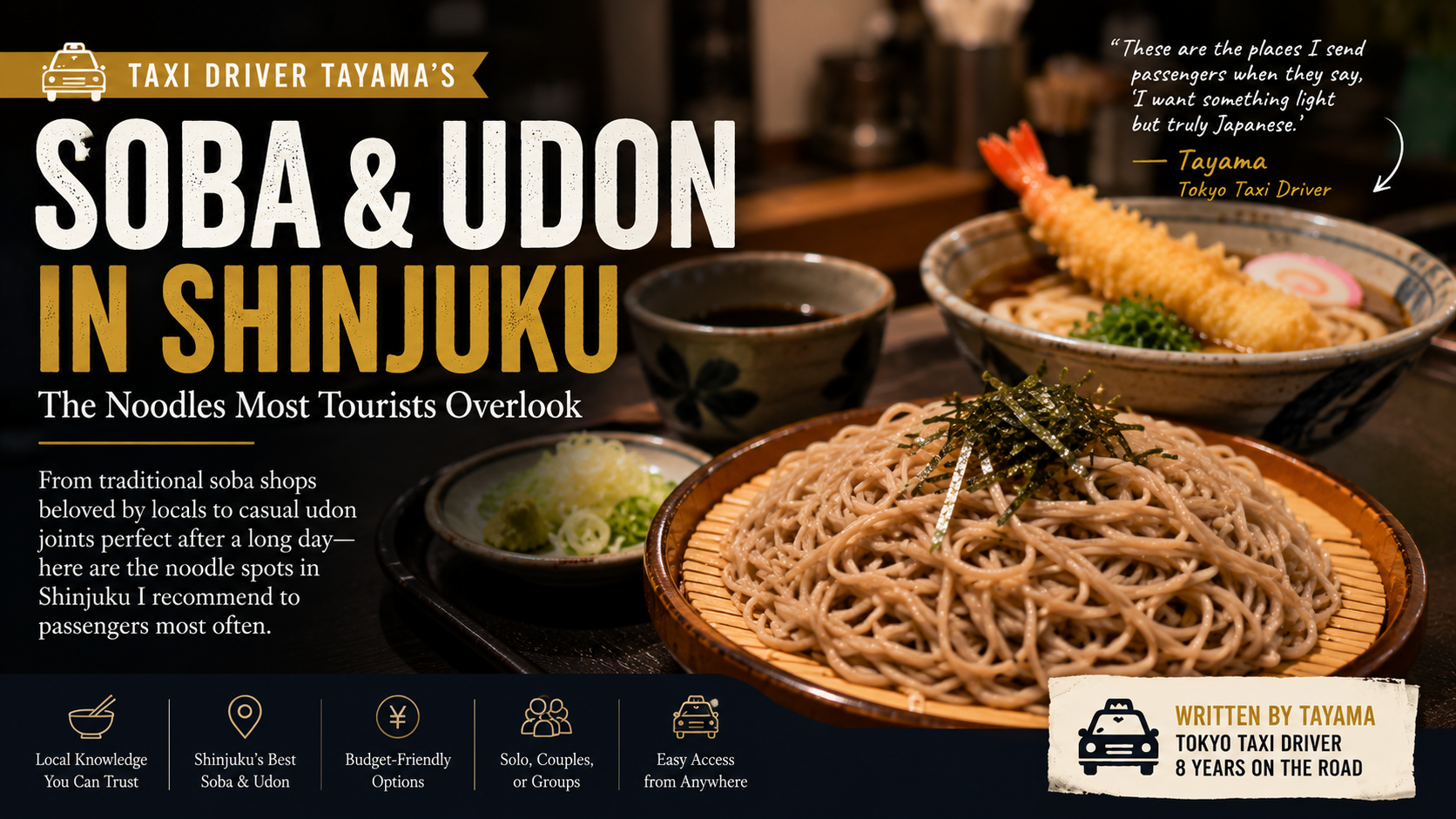
Tokyo has more ramen shops than any other city on earth. But if you eat ramen every day — as most first-time visitors do — you’ll leave Japan without ever tasting the food that Japanese people actually eat most. Soba and udon have been at the heart of Tokyo’s daily food culture since the Edo period. They’re faster, lighter, cheaper, and in many ways, more interesting.
The Shinjuku area alone has everything: old-school handmade soba with 40-year histories, standing noodle counters under train tracks, creative udon that people queue two hours for, and late-night bowls for after the bars close. This guide organises all of it by travel style, so you can find exactly what you need, wherever you are in Shinjuku.
Most visitors arrive with a mental food list built from social media: ramen, sushi, wagyu, conveyor belt sushi. Soba and udon rarely appear on that list — and that is precisely the opportunity. These are dishes that even people who live in Tokyo get genuinely excited about.
Soba in Tokyo traces directly back to Edo-period food stalls that served buckwheat noodles to a busy working population. The craft has been refined over centuries. The very best soba chefs stone-grind buckwheat flour on the day of service and roll the noodles by hand, a process visible through kitchen windows in many shops. The result is something that looks deceptively simple but tastes unlike anything you’ve encountered.
Udon, meanwhile, has undergone a quiet revolution in Tokyo over the past decade. Chefs trained in Kagawa prefecture — Japan’s udon heartland — have opened small shops serving thick, silky, handmade noodles paired with creative toppings including, famously, carbonara. The queues rival the best ramen spots in the city.
Thin, brown-grey noodles made from buckwheat (蕎麦粉, sobako). Has a distinctive earthy, nutty aroma. Can be served cold on a bamboo tray with dipping sauce (seiro/zaru) or hot in broth. The best versions are handmade and visibly uneven — that’s a good sign.
Thick, white, chewy noodles made from wheat flour. Mild in flavour, with a satisfying bounce. The broth base shifts by region: Tokyo uses dark soy-based tsuyu; Osaka and Kagawa use a lighter kombu-dashi. Shinjuku has both styles available.
When looking at soba menus, you’ll see chefs proud to specify their buckwheat ratio. Juwari soba (十割) is 100% buckwheat flour with no binding agents — it has the most intense aroma and is the most technically demanding to make. It crumbles more easily, so portions tend to be smaller. Nihachi soba (二八) is the classic 80% buckwheat, 20% wheat blend — the wheat helps bind the noodles, making them more pliable and slightly easier to eat. Most traditional Tokyo soba shops use nihachi. Both are excellent; juwari is simply the purer expression of buckwheat.
| Juwari (十割) | Nihachi (二八) | Sanpachi (三八) | |
|---|---|---|---|
| Buckwheat | 100% | 80% | 70% |
| Wheat binder | None | 20% | 30% |
| Aroma | ★★★★★ | ★★★★ | ★★★ |
| Texture | Delicate, crumbles | Firm, bouncy | Smooth, sturdy |
| Best suited for | Soba specialists | Traditional shops | Fast-casual chains |
Both soba and udon come hot or cold, and the choice fundamentally changes the experience. Cold soba (seiro/zaru) is served on a raised bamboo tray — you dip the noodles into a small cup of concentrated tsuyu sauce, adding wasabi and sliced scallions to taste. This is the most traditional way to eat soba and the best way to appreciate the noodle’s flavour and aroma. Hot soba (kake) arrives in a bowl of light dashi broth and is closer to a soup. In summer, cold is usually the better choice. In winter, a hot bowl of kakesoba or tamago toji (with egg) is deeply comforting.
Tokyo’s soba broth is dark and pronounced — made with a strong blend of katsuobushi (bonito flakes), dried sardines, and dark soy sauce (koikuchi shoyu). Visitors from Kansai sometimes find it salty; visitors from abroad often find it surprisingly intense. Osaka and Kagawa udon uses lighter kombu-based dashi with pale usukuchi soy sauce — more subtle and delicate. In Shinjuku, you’ll find both: traditional Tokyo shops use the dark broth, while some Kansai-style udon shops offer the lighter version. Fumotoya in Nishi-Shinjuku serves Kansai-style udon that surprises first-timers with how clean and sweet it tastes.
- Rushing between sights? → Standing soba counter (¥400–600, in and out in 10 minutes)
- Want a proper sit-down lunch? → Teuchi Soba Watanabe or Kameya
- Impressive food experience? → Udon Shin (reserve ahead)
- After midnight? → Kameya (open until 5 AM on weekdays) or Fujisoba
- On a very tight budget? → Fujisoba (¥400–700)
- Dining alone? → Any counter-seat soba shop — solo dining is completely normal
- Group of 4+? → Fumotoya or Gensai (table seating, no pressure)
- First time eating soba? → Ask for mori soba — plain cold soba, the purest introduction
Teuchi means handmade — the soba is rolled and cut by the chef, by hand, every day. At the best teuchi shops, you can watch through a glass partition as the chef works. The noodles will be slightly irregular, a little rustic, and noticeably more alive than anything from a machine. These are the places serious soba eaters seek out.
This is one of the most talked-about soba experiences in the Shinjuku area, and the queue of people watching through the glass window tells the whole story before you’ve ordered anything. The chef has been making soba here for over 40 years — you can see the process directly from your seat, which is unusual and makes the meal feel like a performance. The nihachi soba is firm and aromatic, with a clean sweetness that lingers. For first-timers, order mori soba (plain cold soba) and nothing else the first visit — this is the kind of noodle you want to taste without distraction. The tsuyu is Tokyo-style: dark, intense, and excellent. The restaurant was established around 2015 at the current Nishi-Shinjuku location; it is modest in size and fills up fast.
Gensai sits near the West Exit of Shinjuku Station in a traditional Japanese-style interior that feels more like a ryokan tearoom than a city restaurant. It is one of the few soba places in central Shinjuku where you wouldn’t feel strange arriving with a partner or a small group — the atmosphere is intentionally calm. The Kansai-style dashi is lighter and sweeter than the standard Tokyo broth, which often surprises visitors who expected something darker and saltier. Their kombu no o-udon is a bowl of udon in beautifully clear kombu stock, topped with a sheet of kelp — simple, seasonal, and remarkable. They also do a creditable mori soba. Not a place for a fast meal; allow an hour.
In Tokyo’s soba culture, there is a tradition called soba-mae (蕎麦前) — the custom of having sake and small plates before the noodles arrive. The best traditional soba restaurants serve several rounds of carefully made appetizers: dashimaki tamago (rolled omelette), soba gaki (buckwheat dumplings), pickled vegetables, grilled duck, thin-sliced yuba. You sip sake, eat slowly, and let the noodles come last. This is how soba restaurants have operated since the Edo period — and it is completely different from anything you’d experience at a ramen shop.
Fumotoya is a basement restaurant in Nishi-Shinjuku that most tourists never find, which is exactly why it makes this list. The shop is known for seasonal soba — expect a blackboard item each visit that uses whatever buckwheat or toppings the chef sourced that week. One memorable offering is their black soba, made with black beans, black rice, and black sesame seeds alongside buckwheat — a dish that looks dramatic and tastes extraordinary. The soba-mae selection is excellent and pairs well with a glass of cold junmai sake. Primarily frequented by company workers from the surrounding office towers, this means the ambiance is local, relaxed, and thoroughly unpretentious. English is limited but the staff are accommodating.
Regular visitors to this unpretentious neighbourhood shop consistently come back for one thing: the duck soba. Kamo nanban (duck soba) is a classic Tokyo cold-weather dish — sliced duck breast and long onions in a rich, slightly sweet broth over soba noodles. Komatsuan’s version uses carefully sourced duck and a broth that has been refined over years. The restaurant has English menus and a staff that are accustomed to foreign visitors — it is one of the most welcoming traditional soba shops in the area for first-timers. Seats are limited, so arriving just before or after peak lunch (before noon or after 1:30 PM) is advised.
Standing noodle counters — tachi-gui soba — are one of Japan’s most underrated food experiences. You walk in, insert coins into a vending machine or hand over cash at a counter, take a plastic number, and within two minutes a bowl of hot or cold soba appears. You eat standing at a narrow counter, or on a small stool if you’re lucky. These shops are genuinely excellent — the broth is made properly, the tempura is fresh-fried, and the whole experience costs ¥400–600. It is also the most authentically Japanese food experience on this entire list: this is what Tokyo commuters eat for breakfast, lunch, and dinner.
Kameya sits in the atmospheric alleys near Shinjuku Station’s West Exit and is one of the most consistently recommended standing soba counters in Tokyo. The kitchen produces everything freshly — the tempura is fried to order, the broth is made daily — at a price that barely registers. The signature is ganso tentama soba: soba topped with a large kakiage (mixed vegetable and shrimp fritter) and a hot spring egg, all soaked in the dark, umami-rich Tokyo tsuyu. It sounds humble. It tastes exceptional. The counter fits about 10 people at a time. On weekday mornings and evenings it fills with salarymen; on weekends it fills with everyone else, including a surprising number of foreign visitors who have found it on social media. The English menu makes ordering straightforward. Open until 5 AM on most weekdays.
Fujisoba is a Tokyo chain — there are dozens of locations across the city, several around Shinjuku — and it is genuinely excellent for what it is. The noodles are machine-made, the broth is consistent and good, and the menu covers every base: kake, zaru, tempura, curry, tanuki (with tenkasu, crispy tempura bits). Many locations are open 24 hours. This is the standing soba chain beloved by Tokyo residents who need something hot at 3 AM. Not a destination restaurant; a restaurant that will be there when you need it. The Kotakibashi location near JR Shinjuku’s West Exit is a reliable choice and one of the most convenient in the area.
Tokyo’s udon scene has transformed over the past decade. Chefs with deep training in Kagawa-style sanuki udon opened small shops in residential streets, and word spread through social media until the queues stretched around corners. The result is a group of udon restaurants in the Shinjuku area that serve handmade noodles at a level that visitors genuinely struggle to describe — “silky,” “bouncy,” “better than anything I’ve had at home” are the recurring phrases.
Udon Shin sits on a quiet side street in Yoyogi, a six-minute walk from Shinjuku Station’s South Exit, and has been one of the most talked-about noodle restaurants in Tokyo for years. The chef was trained in Kagawa — Japan’s udon heartland — and makes the noodles from scratch every day. The restaurant seats only 12 people. The queue regularly runs 90 minutes to two hours. It is completely worth it.
The signature is Kamatama Udon with Butter, Pepper, and Egg — a hot udon in the Kagawa kamatama style (udon cooked in the pot, served with a raw egg cracked over the top) finished with European butter, cracked black pepper, and soy sauce. It sounds like carbonara. It tastes like the best bowl of noodles you’ve ever eaten. They also do an excellent cold zaru udon if you want to taste the noodle itself without distraction, and a seasonal menu that changes regularly.
The queue system: arrive before 10:30 AM, take a numbered ticket from the machine outside, scan the QR code to track your wait on your phone, then go shopping in Shinjuku until the app calls you back. Alternatively, book via Tablecheck (about ¥2,000 reservation fee per person, non-refundable). Cash only. No credit cards.
Located in the basement of a building near Tochomae Station (the Tokyo Metropolitan Government building stop), Hanabishi offers table seating with a menu that covers both hot and cold udon in multiple styles. The Kansai-style dashi — light, subtly sweet kombu broth — is a revelation for visitors used to the dark Tokyo style. Their curry udon is popular and enormous: a bowl the size of a mixing bowl, topped with mitsuba and sliced narutomaki fishcake. Live music some evenings adds an unexpected charm. The space is large enough that groups of four to six aren’t a problem, and the staff are patient with menu questions. A slightly longer walk from central Shinjuku, but worth it if you’re visiting the observation deck of the Tokyo Metropolitan Government building anyway.
One of the most useful things to know about eating in Shinjuku is that a very good bowl of soba or udon costs about the same as a coffee at a chain café. The standing soba counter experience — already described above with Kameya and Fujisoba — is the gold standard for budget eating. But there are a few other options worth knowing.
Iwamoto Q is the chain to know if you’re near the East Exit of Shinjuku Station. Larger portions than most standing shops, a reliable dashi, and a menu that covers everything from plain cold soba to warm kakiage bowls to tanuki and curry variations. They also do both soba and udon, so groups with mixed preferences can eat together at the same counter. This is genuinely good food at convenience store prices — a strong recommendation for anyone on a tight budget or in a hurry.
Solo dining in Japan is not just accepted — it’s designed for. The standing counter is the ultimate solo meal format: you stand, you eat, you leave in 10 minutes. But even seated soba restaurants are set up primarily for one or two diners. Counter seating is the norm rather than the exception. You won’t feel strange eating alone at any restaurant on this list.
- Counter seats: At soba-ya, counter seats facing the kitchen let you watch the chef work. Request a counter seat — say “カウンターをお願いします” (kauntā o onegaishimasu).
- Ticket machines: Many budget shops use vending machines. Buy your ticket, hand it to the staff, wait for your name or number. No Japanese needed.
- Timing: Arrive slightly before or after peak lunch (12–1 PM). Solo diners at off-peak times almost never wait.
- Best solo pick: Teuchi Soba Watanabe — counter seat, glass window to kitchen, no pressure, no time limit.
Shinjuku does not sleep, and neither do its noodle shops. If you’ve been in Kabukicho, Golden Gai, or Omoide Yokocho until midnight or later, a bowl of soba is one of the best ways to close the evening. The hot broth is stabilising. The noodles are filling without being heavy. And the experience of eating at a counter beside Tokyo locals coming off late shifts is something you’ll remember.
Kameya Shinjuku (described above) is the clear first choice — open until 5 AM on weekdays, located in the alley near the West Exit, and serves its best work late at night. The kakiage tempura is fried fresh through the evening hours.
Nadai Fujisoba at multiple Shinjuku locations runs 24 hours. The Shinjuku store on the east side is the most convenient for post-Kabukicho meals. The tanuki soba (soba with crispy tenkasu tempura bits) is the classic late-night order — quick, hot, and deeply satisfying at 3 AM.
Not just permitted — expected. Slurping soba aerates the noodle, cools it slightly, and enhances the aroma. Loud slurping is considered a compliment to the chef. First-timers feel self-conscious; within two visits it becomes natural.
For cold soba (mori/zaru): lift a mouthful of noodles with chopsticks, dip the lower third into the tsuyu (not the whole portion), and eat in one smooth motion. Don’t stir the noodles into the sauce — it dilutes the flavour.
After eating cold soba, the staff will bring a small ceramic pot of soba-yu — the hot water used to cook the noodles, now cloudy with buckwheat starch. Pour it into your remaining tsuyu sauce and drink it like soup. This is one of the great small rituals of Japanese food culture. Don’t skip it.
Wasabi goes directly into the tsuyu for cold soba — a small amount, not all at once. Seven-spice mix (shichimi togarashi) is for hot soba and udon. Grated daikon (daikon oroshi) is common for cold soba — it’s placed on the tray; add to the tsuyu as you eat.
At sit-down restaurants, tempura soba (ten-seiro) usually means the tempura arrives alongside the cold soba on a separate plate. Dip the tempura in the tsuyu, then eat with the soba. Don’t drown the tempura in sauce — just a light dip keeps it crispy.
A small pile of sliced negi (long onions / scallions) will appear on the tray or as a condiment. Add to your tsuyu. Japanese diners add them all at once; adding gradually keeps the flavour fresher. Either is fine.
Japanese restaurant staff are generally patient with foreign visitors, especially at soba and udon shops where the ordering process is often streamlined by vending machines or picture menus. These phrases will take you from complete beginner to confident noodle diner.
People ask me all the time: “What do taxi drivers actually eat?” And the honest answer is soba more than anything else. It’s fast, it’s filling, it doesn’t require a reservation, and you can eat at 2 PM or 2 AM with equal results. Ramen is a special occasion food for me — I eat it maybe twice a month. Soba I eat multiple times a week.
My personal pick in Shinjuku is Teuchi Soba Watanabe in Nishi-Shinjuku for a proper lunch, and Kameya in the Omoide Yokocho area for a late night. The two restaurants represent opposite ends of the soba experience — one is a craftsman’s workshop where you watch the chef work and eat in something close to silence, the other is a standing counter in a smoky alley at midnight where you’re shoulder-to-shoulder with locals. Both are completely Tokyo. Both are worth your time.
If I could only send you to one noodle restaurant in Shinjuku, though, it would be Udon Shin. You have to plan ahead and the queue is real, but the kamatama udon there — the butter-and-egg hot udon — is genuinely one of the best things I have ever eaten in this city. I say that as someone who has eaten in this city every day for eight years.